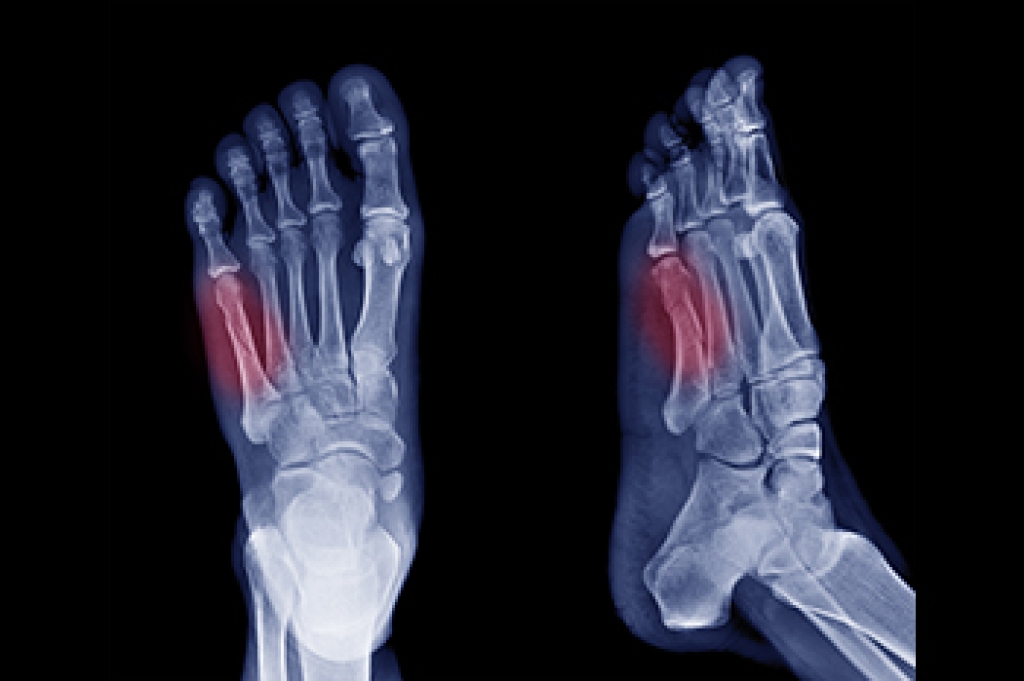
Pain along the outer edge of the foot after a twist or awkward step could signal a Jones fracture. This injury affects the fifth metatarsal, the long bone that connects to the little toe. The break occurs near the base of the bone, just beyond its wider end. This area receives a limited blood supply, which makes healing more difficult than with many other foot fractures. A sudden change in direction during sports places stress on this region. Repeated pressure from running also contributes to injury. High arches increase pressure along the outside of the foot and raise the risk of this fracture.
Symptoms include pain, swelling, and bruising along the outer foot. Standing or walking usually increases discomfort, and the area may feel tender when touched. Some patients develop pain gradually rather than after one clear injury. A podiatrist asks how symptoms started and examines the foot to locate the painful area. X-rays help identify the break and show whether the bone has shifted. When an early fracture does not appear clearly, additional imaging tests help confirm the diagnosis. Identifying the exact location matters because nearby fractures have different treatment needs and healing patterns.
A podiatrist selects treatment based on the fracture and the patient's activity level. A cast or protective boot keeps the foot stable while the bone repairs itself. The podiatrist also determines how long the patient must avoid putting weight on the injured foot. Follow-up examinations and imaging tests track healing before activity increases. Surgery uses screws or other hardware to stabilize certain fractures, particularly when the bone shifts or fails to heal. Recovery sometimes takes several months because of the limited blood supply. Returning to sports too soon increases the risk of another break. If you have symptoms of a Jones fracture, it is suggested that you schedule an appointment with a podiatrist for a diagnosis and appropriate treatment.
A broken foot requires immediate medical attention and treatment. If you need your feet checked, contact Luis Esquerdo Cruz, DPM from Dr. Esquerdo Podiatry and Laser Center . Our doctor can provide the care you need to keep you pain-free and on your feet.
Broken Foot Causes, Symptoms, and Treatment
A broken foot is caused by one of the bones in the foot typically breaking when bended, crushed, or stretched beyond its natural capabilities. Usually the location of the fracture indicates how the break occurred, whether it was through an object, fall, or any other type of injury.
Common Symptoms of Broken Feet:
- Bruising
- Pain
- Redness
- Swelling
- Blue in color
- Numbness
- Cold
- Misshapen
- Cuts
- Deformities
Those that suspect they have a broken foot shoot seek urgent medical attention where a medical professional could diagnose the severity.
Treatment for broken bones varies depending on the cause, severity and location. Some will require the use of splints, casts or crutches while others could even involve surgery to repair the broken bones. Personal care includes the use of ice and keeping the foot stabilized and elevated.
If you have any questions, please feel free to contact our office located in San Juan, PR . We offer the newest diagnostic and treatment technologies for all your foot care needs.